


1-3 Sophia University Research
【Graph Display Tips:If the Graph Does Not Display Correctly】
Depending on your monitor size or browser settings, some numbers or parts of the graph may not be fully visible.
If this occurs, hover your mouse over the graph to view detailed information.
If the graph appears too small, switch to full-screen mode for better visibility.
Note: The graph may not display correctly depending on your browser or OS version. For best results, use the latest version of your browser and operating system.
1-3-1 Research Literature
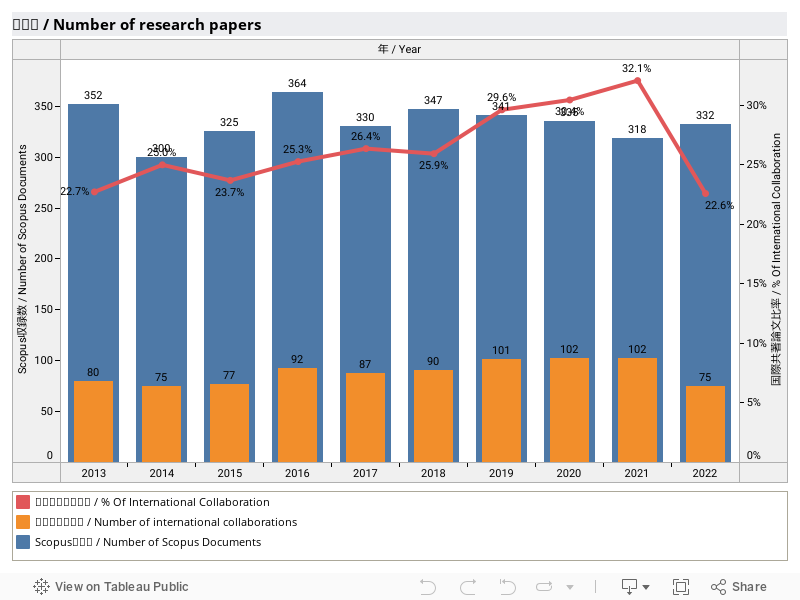
Bibliographical and citation data generated by SciVal from Scopus and produced as a plot (data retrieval, October 5, 2026; documentary type limited to Articles, reviews, conference papers, books and chapters).
1-3-2 Intellectual Property
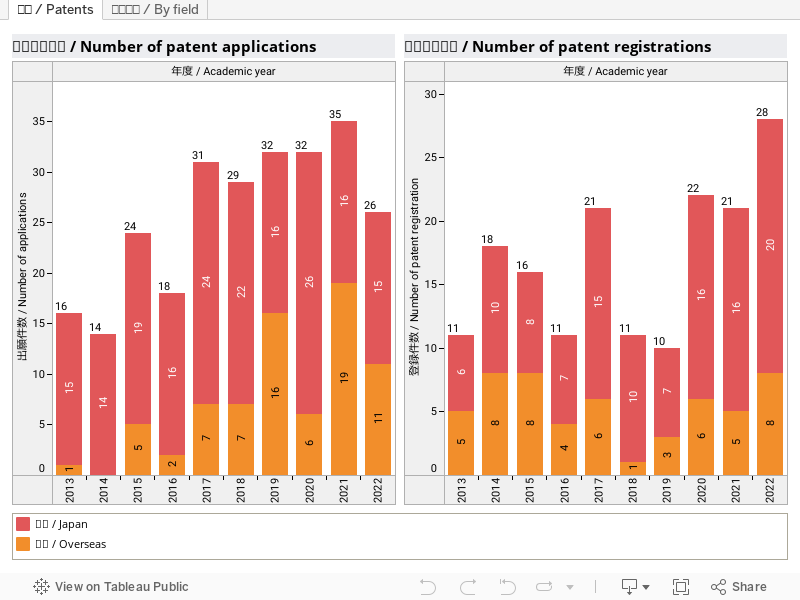
Domestic and international patent applications have remained at approximately 20 per year over the past three years, reflecting a stable and continuous commitment to intellectual property creation. In recent years, the University has expanded its efforts beyond patent licensing with industry partners to include support for university startups, thereby broadening opportunities for the commercialization of research outcomes.
By research field, nanotechnology and materials science continue to account for the largest share of granted patents.. Meanwhile, patent registrations in ICT and life sciences fields have increased, demonstrating the ongoing diversification of the University’s research activities.
1-3-3 Intra-university research grants
1-3-4 External research funds
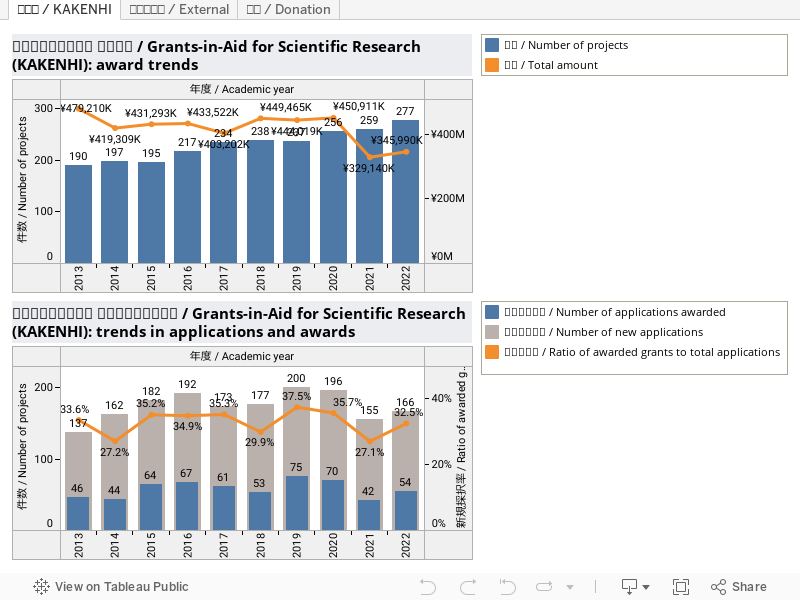
This figure shows trends in the number of research projects led by principal investigators affiliated with Sophia University, together with the total amount of research funding awarded.
The Grants-in-Aid for Scientific Research (KAKENHI), Japan’s largest competitive funding program, supports original and pioneering academic research across a wide range of disciplines from the humanities and social sciences to the natural sciences, and from fundamental to applied research. Sophia University has fostered an environment that encourages researchers to pursue larger funding categories. In AY2025, the number of funded projects, including continuing projects, decreased from the previous year, while the total funding amount remained largely unchanged. Although the overall success rate for newly adopted projects declines, new grants were secured in major funding categories, including Scientific Research (A), for which there had been no successful application in the previous year. In addition, the success rate for Early-Career Scientists improved significantly.
The number and value of Contract Research/External Collaborative Research and Scholarship Research Donations tend to fluctuate from year to year depending on socioeconomic conditions and the progress of individual research activities. Nevertheless, the growing number of Contract and External Collaborative Research projects reflects Sophia University’s continued efforts to promote collaboration among industry, government, and academia.